
Most golfers prematurely obsess with impact.
They watch slow-motion videos of tour players striking the ball. They analyze wrist angles, shaft lean, and body positions at impact. They search for the magic move that will instantly transform their ball striking.
The problem is that impact is often the result of everything that happened before it.
In many cases, the swing errors that show up at impact can be traced back to the very beginning of the golf swing—the takeaway.
That's why I often tell my students:
"Impact tells the story, but the takeaway sets the stage."
If you want a more consistent golf swing, you need to understand why the takeaway matters and how a proper one-piece takeaway can help you build a more repeatable motion.
What Is the Takeaway?
The takeaway is the initial movement of the club away from the golf ball.
It begins the moment the club starts moving and ends when the shaft reaches approximately parallel to the ground, often referred to as the P2 position.
While it may seem like a small portion of the swing, the takeaway establishes the club's path, the relationship between the club and the body, and often influences what happens throughout the rest of the backswing.
Think of it like laying the foundation of a house.
A crooked foundation doesn't guarantee the house will collapse, but it usually requires a lot of compensation to make everything fit together later.
The golf swing works much the same way.
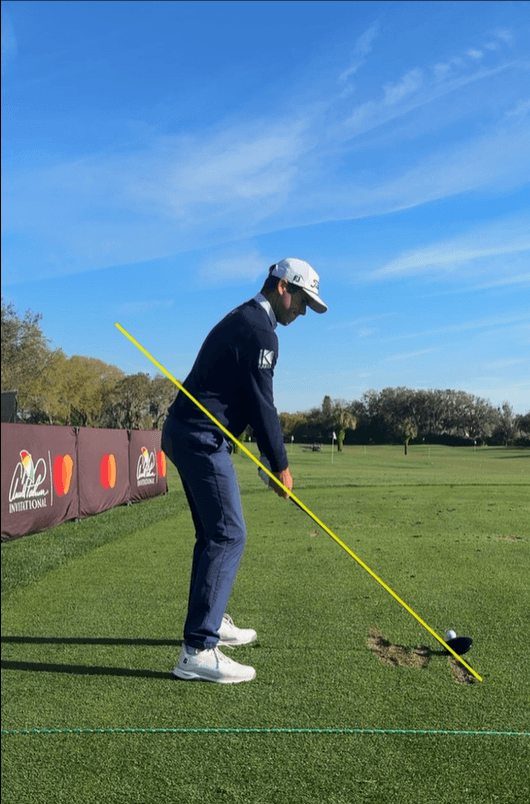
Establishing correct angles at address is critical to keeping the club on plane during the takeaway.
Why the Takeaway Matters
The golf swing happens in less than two seconds.
There isn't enough time to consciously make multiple corrections during the swing. Because of that, golfers tend to react instinctively to positions created earlier in the swing.
If the club starts moving off plane during the takeaway, the body often creates compensations to get the club back into a position where it can get back to the ball.
These compensations can include:
- Excessive lifting of the arms
- Over-the-top downswing paths
- Casting or early release
- Poor face control
- Loss of balance
- Inconsistent contact
Many golfers spend years trying to fix these symptoms without addressing the source of the problem.
The takeaway may not be the only issue, but it is often one of the first places I evaluate when analyzing a golf swing.
What Does "On Plane" Mean?
When instructors talk about the club staying "on plane," they're referring to the club traveling along a path that matches the golfer's posture and swing inclination.
At P2, when the shaft is parallel to the ground:
- The club shaft should parallel to the ground & toe line, pointing near the target line.
- The clubhead should be positioned roughly in line the hands when viewed from down the line.
- The face angle should appear to match the spine angle established at address.
While every golfer has slight variations, most elite players share this common characteristic: the club remains organized and connected to the body early in the swing.
This allows them to continue building the backswing without needing major compensations.
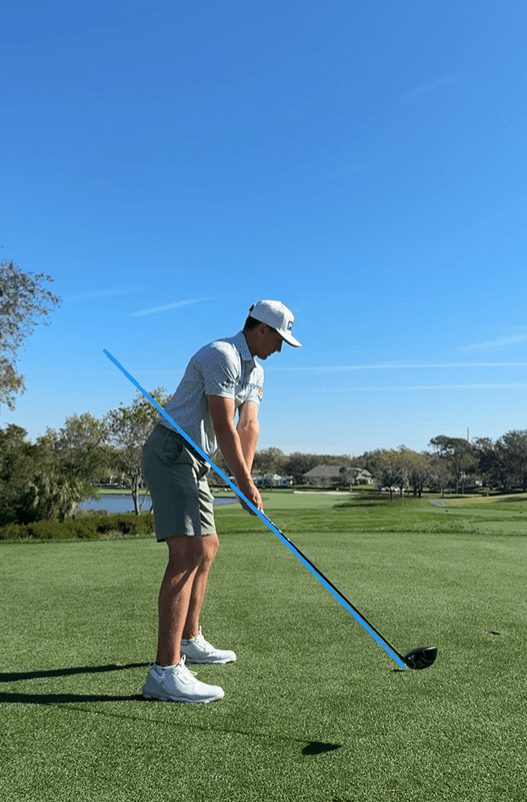
Notice how Mackenzie Hughes keeps the club on the original shaft plane half way throught the takeaway.
The Benefits of a One-Piece Takeaway
One of the easiest ways to improve the takeaway is by learning a one-piece takeaway.
A one-piece takeaway means the chest, shoulders, arms, and club begin moving together as a unit during the first portion of the backswing.
Rather than immediately rolling the forearms or lifting the hands independently, the body helps move the club away from the ball.
The result is a more connected motion that keeps the club in a better position.
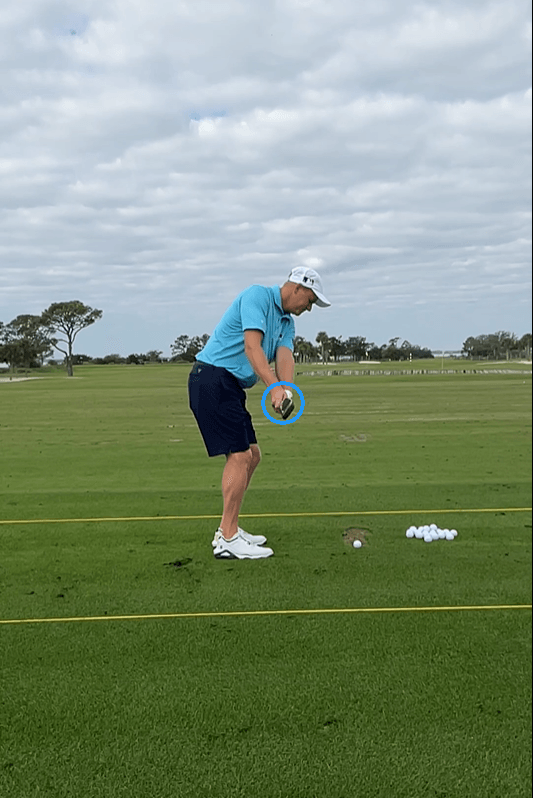
The classic P2 look. Cub is pararllel to the target and toe line. Notice how the club head and hands fit in the circle.
Benefit #1: Improved Clubface Control
Many golfers open or close the clubface excessively during the takeaway.
This often creates face control issues later in the swing.
A one-piece takeaway helps maintain a more stable clubface position, reducing the need for compensations on the downswing.
Benefit #2: Better Swing Plane
When the body and arms move together, the club is more likely to remain on plane.
This makes it easier to complete the backswing and transition into the downswing without rerouting the club.
Benefit #3: More Consistent Ball Striking
Consistency comes from reducing variables.
The fewer corrections your body has to make during the swing, the more repeatable your impact conditions become.
A quality takeaway helps simplify the motion from start to finish.
Benefit #4: Better Sequencing
Golf is a chain reaction.
When the takeaway starts correctly, the rest of the swing tends to organize itself more naturally.
When it starts poorly, the body often spends the remainder of the swing trying to recover.
Common Takeaway Mistakes
The Club Gets Too Far Inside
This is one of the most common issues among recreational golfers.
The hands pull inward while the clubhead quickly disappears behind the body.
This often leads to a steep downswing or a clubface that becomes difficult to control.
The Club Gets Too Far Outside
In this pattern, the golfer pushes the club away from the body excessively.
This can lead to an over-the-top downswing and slices.
Excessive Forearm Roll
Some golfers rotate the clubface open almost immediately.
While some rotation is natural during the swing, excessive early rotation often creates timing-dependent ball striking.
Independent Hand Action
When the hands move independently from the body, the swing can become disconnected.
This makes it harder to maintain consistent positions throughout the backswing.
A Simple Drill to Improve Your Takeaway
One of my favorite drills is surprisingly simple.
Place an alignment stick or golf club across your chest and assume your golf posture.
Without using your hands, rotate your chest away from the target.
Notice how your shoulders naturally begin turning while maintaining posture.
Now grab a club and recreate that same feeling.
Allow your chest, arms, and club to move together during the first part of the backswing.
The goal isn't to make the swing rigid.
The goal is to feel how the body helps move the club instead of relying solely on the hands.
The Bigger Picture
A perfect takeaway does not guarantee a perfect golf swing.
Professional golfers all have unique swings and slight variations in how they move the club away from the ball.
However, almost all great ball strikers share one thing in common:
They begin the swing in a way that puts the club in a position where the rest of the motion can work efficiently.
That's why the takeaway deserves more attention than it often receives.
Before you spend hours trying to fix your downswing, your release, or your impact position, take a closer look at the first few feet of your swing.
You may discover that the answer has been there all along.
Final Thoughts
Golfers often focus on what happens at impact because that's where the ball is struck.
But impact is usually a reflection of everything that came before it.
A connected, one-piece takeaway helps keep the club on plane, improves clubface control, reduces compensations, and creates a stronger foundation for the rest of the swing.
Remember:
Impact tells the story, but the takeaway sets the stage.
If you're struggling with consistency, start your investigation at the beginning of the swing. The first few feet may be the most important feet in golf. If you're having issues nailing this position, head over to the lessons tab to book your next lesson, in-person or online.